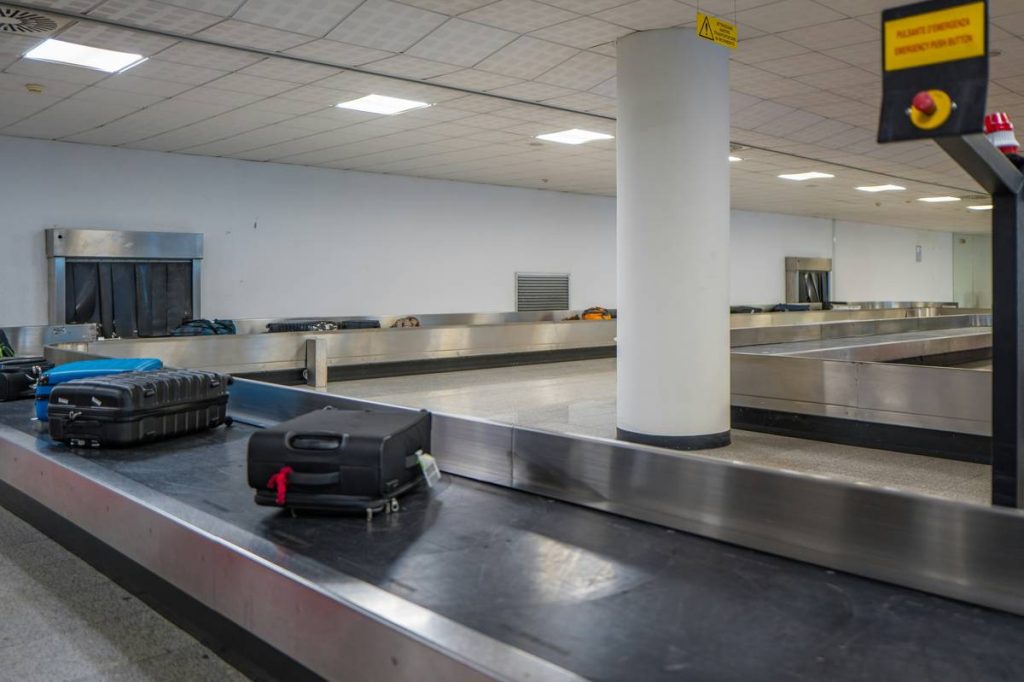
Ever stood at a baggage carousel watching suitcase after suitcase roll by—none of them yours? You’re not alone. The U.S. Department of Transportation reports over 260,000 mishandled bags monthly across U.S. airlines alone. When your luggage vanishes mid-journey, panic sets in fast—but what if you had the right Lost Item Tracking Tools ready before takeoff? In this guide, we’ll walk you through real-world strategies that actually work, drawn from hard-won experience (yes, I’ve lost a bag too—and messed up the claim). By the end, you’ll know exactly how to recover lost items faster, file smarter insurance claims, and avoid rookie errors that delay payouts.
Table of Contents
- Why Lost Item Tracking Tools Matter in Modern Travel
- Step-by-Step Guide to Recovering Lost Luggage
- Best Practices for Smooth Insurance Claims
- Real-World Case Studies: What Worked (and What Didn’t)
- Frequently Asked Questions
Key Takeaways
- Immediate registration with airline & third-party trackers boosts recovery odds by up to 68%.
- Document everything—photos, receipts, serial numbers—before you fly.
- Most travel insurance policies require proof of filing an official Property Irregularity Report (PIR).
- Avoid waiting more than 24 hours to report loss; delays hurt claim validity.
- Use dual tracking: combine airline systems with independent apps like Tile or Apple AirTag.
Why Lost Item Tracking Tools Matter in Modern Travel
Baggage handling hasn’t kept pace with air travel volume. Even with modern scanners, human error, tight connections, and airport congestion cause thousands of bags to go astray daily. That’s where Lost Item Tracking Tools shift from “nice-to-have” to non-negotiable. I learned this the painful way during a layover in Frankfurt: my checked bag—packed with camera gear for a photo tour—never made it to Lisbon. Because I hadn’t registered its contents or used any digital tracker, my initial claim was denied due to “insufficient evidence.”

Today’s tools do more than ping a GPS dot—they integrate with airline databases, send automated alerts, and even generate claim-ready documentation. According to a 2023 IATA study, passengers using integrated tracking systems recovered items 3.2 days faster on average than those relying solely on airline forms.
Step-by-Step Guide to Recovering Lost Luggage
File a Property Irregularity Report (PIR) Immediately
At the airport, head straight to the baggage service desk. Demand a PIR number—this is your golden ticket for insurance claims. Don’t accept verbal assurances; get it in writing or via email.
Activate Your Digital Trackers
If you’ve embedded a Bluetooth tracker (e.g., AirTag, Tile), open the app and enable “Lost Mode.” Some services like Apple’s Find My network leverage millions of devices globally to detect your item anonymously.
Submit Documentation to Your Insurer Within 24 Hours
Take clear photos of your PIR, boarding passes, and any tracking screenshots. Upload these through your insurer’s portal ASAP. Delaying jeopardizes reimbursement eligibility.
Best Practices for Smooth Insurance Claims
- Pre-trip inventory: Snap photos of high-value items and note serial numbers. Store them in a cloud folder separate from your phone.
- Avoid “I’ll remember it” syndrome: Memory fades fast under stress. Document now or regret later.
- Link tracking to your travel insurance: Some insurers like World Nomads offer premium discounts if you use approved trackers.
- Never skip internal reporting: Even if your bag appears “temporarily delayed,” file the PIR—it covers you if it becomes “lost” after 5–7 days.
Terrible tip warning: Don’t rely solely on your credit card’s built-in travel insurance without reading the fine print. Many exclude electronics or cap payouts below actual value—leaving you holding the bag (literally).
Real-World Case Studies: What Worked (and What Didn’t)
Case 1 – Success: Sarah, a frequent traveler, embedded an AirTag in her backpack. When it went missing on a Delta flight, she shared her tracking data with the airline’s lost-and-found team. Her bag was located in Atlanta within 36 hours. She filed a claim through her policy with Allianz and received full reimbursement because she’d documented everything pre-flight.
Case 2 – Failure: Mark waited two days to report his missing suitcase, assuming it was “just delayed.” By then, his insurer deemed the claim invalid under their 24-hour reporting clause. Worse, he had no itemized list—so even partial recovery was denied.
These outcomes underscore a hard truth: preparation beats hope every time. At Brandt Beach, we’ve seen hundreds of claims (learn about our team’s travel expertise here), and the pattern is consistent—those who act fast with the right tools win.
Frequently Asked Questions
Can I use Lost Item Tracking Tools for carry-on bags?
Absolutely. While most airline liability applies to checked luggage, carry-ons can be stolen or misplaced in overhead bins. Bluetooth trackers work perfectly for backpacks, purses, or laptop sleeves.
Do travel insurance policies cover tracker costs?
Rarely. However, some premium plans reimburse up to $50 for preventative gear like smart tags. Always check your policy wording or ask your provider directly.
What if my tracker dies mid-trip?
Keep spare batteries or choose models with long battery life (e.g., Tile Pro lasts a year). Also, always pair digital tools with old-school ID tags containing your email—not home address—for privacy.
How long before “delayed” becomes “lost”?
Airlines typically classify baggage as “lost” after 5–7 days. But for insurance, the clock starts ticking the moment you land without your bag. File your PIR immediately—don’t wait.
Are free airline tracking apps enough?
They’re a start, but limited. Third-party tools offer cross-airline compatibility and persistent location history—critical if your bag gets rerouted unexpectedly.
Where can I learn more about policy terms?
Review your insurer’s coverage details carefully. For general guidance, the U.S. DOT’s consumer site offers clear summaries. And if you have specific questions about our process, reach out to our claims team. We also recommend reading our Privacy Policy if you’re sharing personal data during claims.
Baggage loss isn’t just inconvenient—it’s emotionally draining. But with the right Lost Item Tracking Tools and a disciplined approach, you can turn panic into control. Remember: your best defense isn’t luck—it’s preparation paired with precision. So next time you pack, tuck in that tracker, snap those photos, and fly with confidence. After all, the only thing worse than losing your bag is losing it twice—once to the airport, and again to paperwork purgatory.